No owner, no automation: the rule that keeps SMB AI from breaking
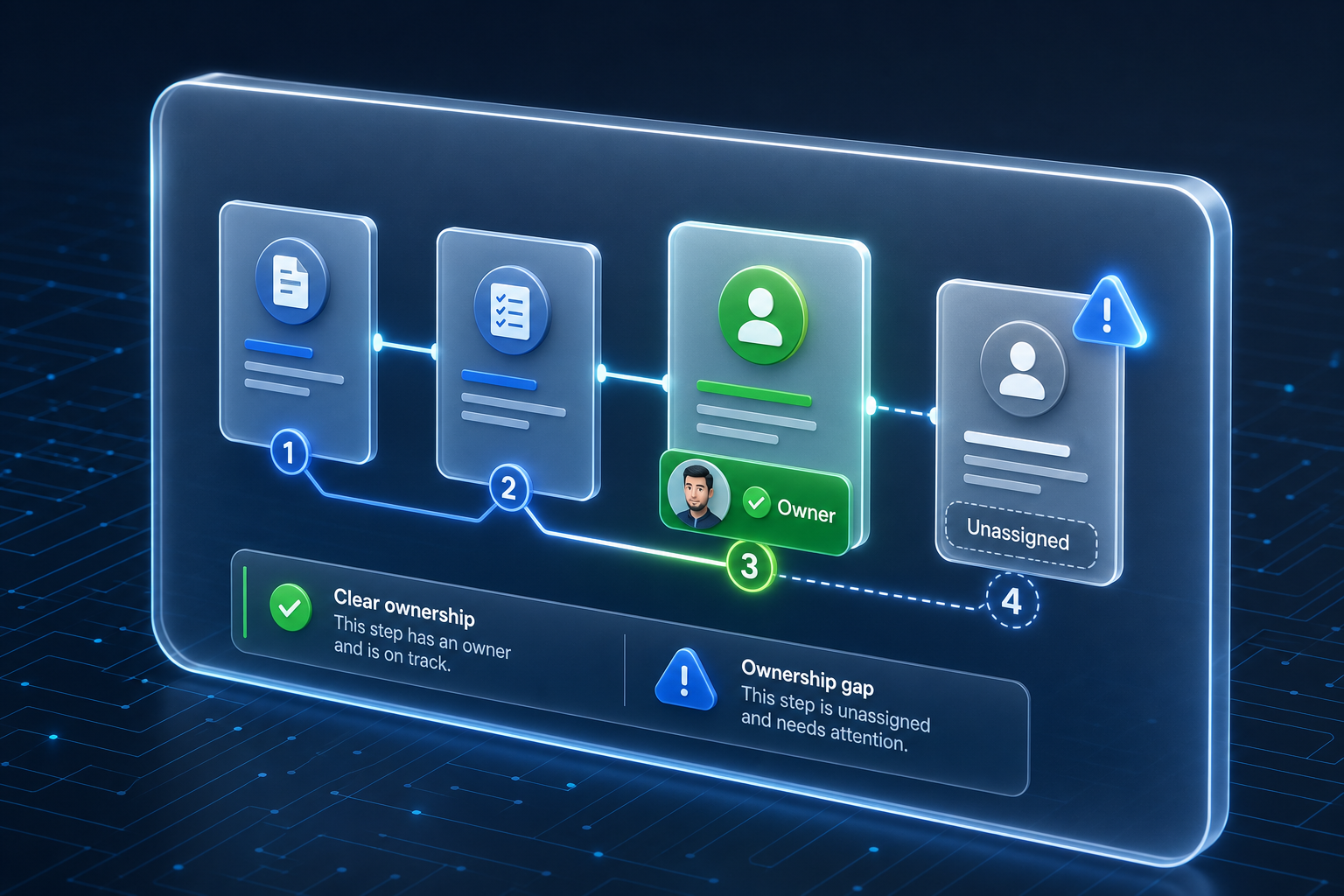
The automation did not break because the AI got dumber overnight. It broke because the one person who understood it was on vacation.
I've watched this play out more times than I can count. A tool changes a setting, a step fails quietly, and by the time anyone notices, the damage is done. The technology worked fine the whole time. Nobody owned it.
At a 14-person marketing agency, client invoicing ran through an automation the founder had built himself. He took a week off. A billing tool shifted one default, a step failed without a sound, and no invoices went out for nine days. The fix took ten minutes once someone looked. The problem was that no one was assigned to look.
Why small businesses are the most exposed
Big companies get away with fuzzy ownership because they have layers. A team, a manager, someone whose actual job is to notice. Small businesses do not have that cushion. When the one person who "just handles it" is out sick, the automation is orphaned, and orphaned automations fail silently.
"Everyone owns it" is the same as "no one owns it." The fix is not more people. It is naming who does what, before you turn anything on.
The four roles behind every reliable automation
Every automation needs four roles filled. In a small business, one person often holds two or three of them, and that is fine. What is not fine is leaving any of them blank.
- Accountable. Owns the outcome. The one person responsible if this goes wrong. There is exactly one.
- Approval. Signs off on changes and on anything the automation does outside its normal lane.
- Operations. Watches the alerts, clears routine exceptions, and can tell you it actually ran.
- Maintenance. Fixes it when it breaks and updates it when a tool it depends on changes.
These are jobs, not job titles. "Marketing owns it" is not an answer. "Sarah is accountable and approves changes, Devin watches the alerts, our contractor maintains it" is.
The three gates I never skip
Before anything goes live, it clears three checks:
- No owner, no automation. Every role is filled by a named person.
- No backup, no release. The critical roles have a documented backup. If the whole thing lives or dies with one person, it is not ready.
- No escalation, no autonomy. An automation only runs unattended if there is a clear path for what happens, and who gets pulled in, when it fails.
Do this the week you read this
Take every automation you run, even the small ones, and write one line each: who is accountable, who approves changes, who watches it, who fixes it. Any blank cell is not a paperwork problem. It is your next incident, and now you know exactly where it will come from.
This is the first thing I set up before automating anything. The best AI workflow in the world is worthless the moment nobody owns it.
Keep exploring
Not sure who owns what across your current tools and workflows? Start the AI Readiness Audit or contact FIT and we will map the ownership gaps you cannot see until something breaks.