Built to fail safely: what happens when your automation breaks
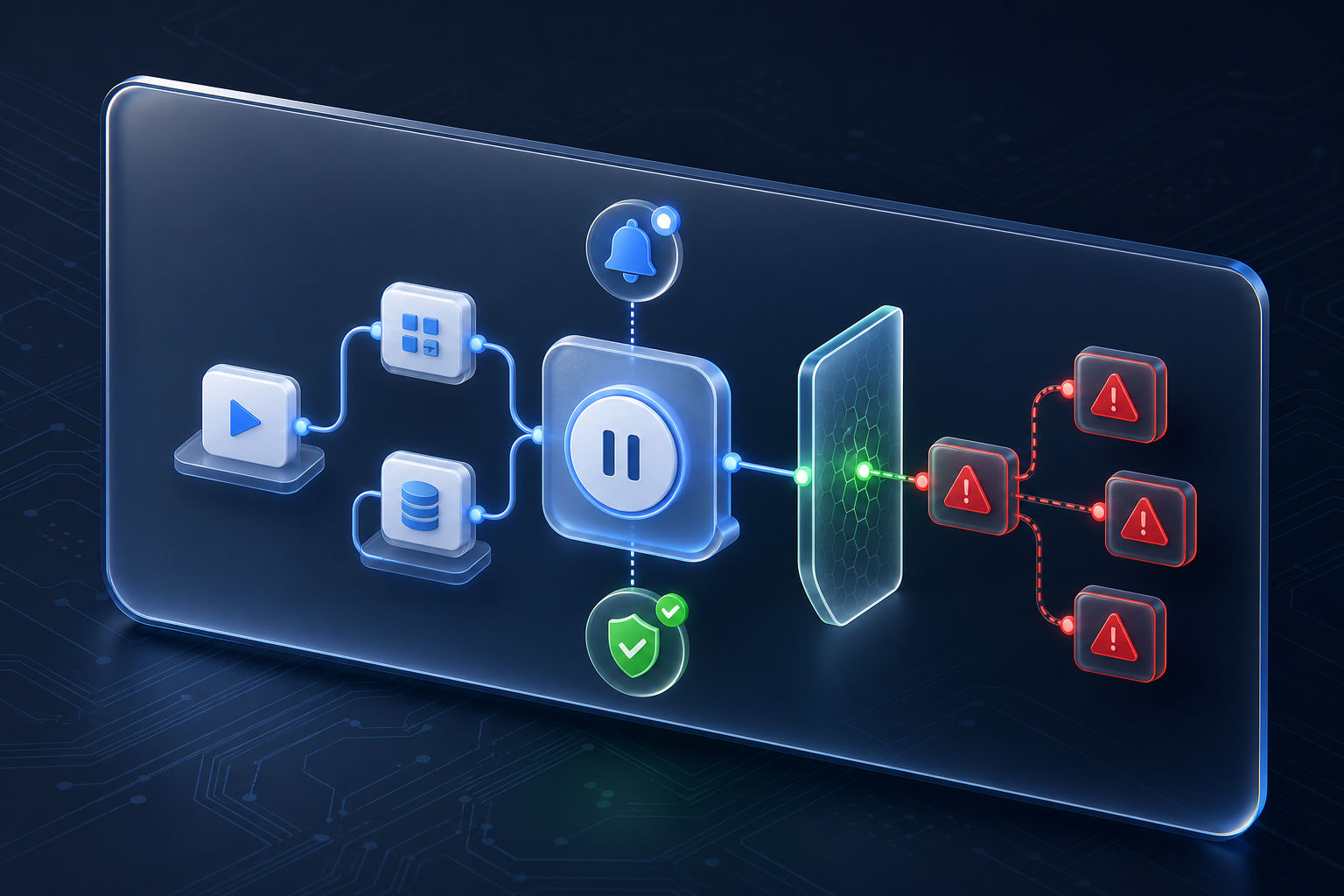
Nobody can promise you an automation will never break. A tool changes, an input arrives in a shape no one expected, a service goes down. It happens.
What a trustworthy partner can promise is that when something breaks, it breaks safely. Loudly, contained, and with someone already on it. That is a design choice, not luck.
Series: Trusting your AI partner — Part 2 of 3. How a partner gets access · How it fails safely · How you leave clean
Fail loud, not silent
The most dangerous failure is the quiet one. An automation that keeps running on bad data, sending wrong emails or skipping steps, while everyone assumes it is fine.
Safe automations do the opposite. When something looks wrong, they stop and raise a flag. Notify and pause beats continue and hope, every time. A paused workflow is an inconvenience. A silent one is an incident.
Nothing deletes or sends on its own
Good automations are non-destructive by default. Anything irreversible, deleting records, sending to customers, moving money, requires an explicit decision, and usually a human check at that exact step. The automation drafts and prepares. A person approves the moment that actually matters.
There is always an undo
Higher-risk changes ship with a rollback plan, so a bad update can be reversed in minutes instead of unwound by hand. And the backups behind your data are restore-tested, not just taken. A backup no one has ever restored is a rumor, not a safety net.
Someone is already on it
Safe failure is not just technical. It means monitoring that watches the automation's health and the tools it depends on, alerts that reach a named person, and a short postmortem afterward so the same thing does not break twice.
When you evaluate a partner, ask a simple question: "what is your rollback plan when this breaks?" The answer tells you whether they have thought past the demo.
Keep exploring
This is Part 2 of Trusting your AI partner. Before this: how a partner gets access. Next: what happens to your data when you leave. To pressure-test the guardrails on what you already run, start the AI Readiness Audit or contact FIT.