AI beyond the search box: run a session, not a search
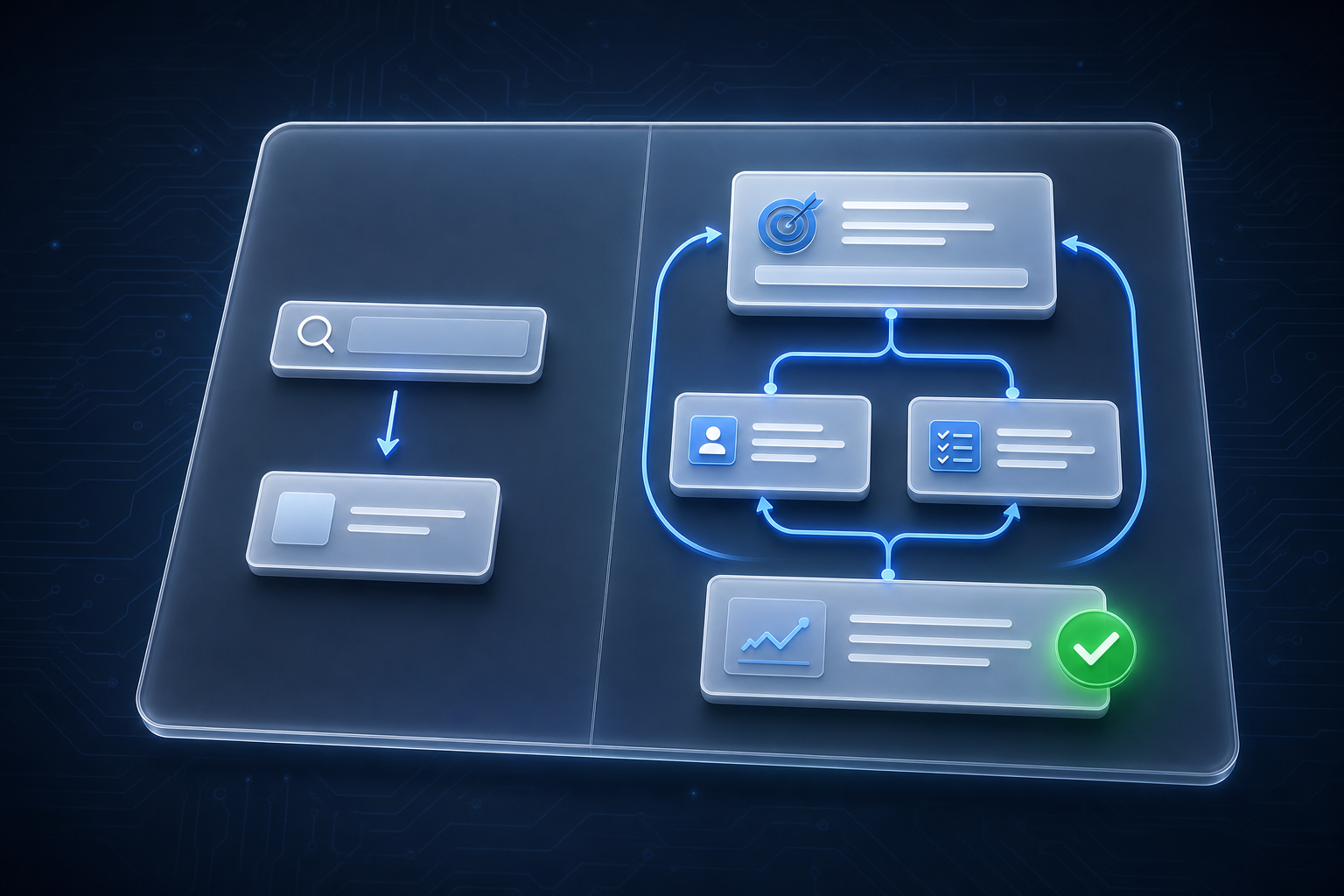
Most people use AI like a search engine. Type a question. Read the answer. Close the tab. It feels quick, and the result is usually a generic take you could have guessed on your own.
There is a better way to work, and it is not about better wording. It is about switching modes. Stop treating AI like a smarter search box. Start running a short working session that ends with something you can actually use.
Why search box thinking caps what you get
A search box wants one thing: a short query. So that is what you give it. One line, no context, no goal. The answer matches the effort. Broad question in, broad answer out.
The cap is not the model. It is the mode. When you ask for a quick opinion, you get a quick opinion. Nothing knows what you were trying to accomplish, so the reply stays safe and general. You read it, shrug, and move on underwhelmed.
From a question to a goal, context, and a real task
A working session starts differently. You give the AI three things up front:
- A goal. What you are trying to produce, and why.
- Context. The real details: the client, the numbers, the constraints, the draft you already have.
- A task. A specific thing to do right now, not a topic to muse on.
"What should I put in a follow-up email?" is a query. "Here is the client, here is what we agreed, write a follow-up that confirms the timeline and asks for the deposit" is a task. Same tool. Very different output. Supplying that background well is its own skill, covered in How to Give AI the Context It Needs.
Steer and iterate instead of taking the first answer
The first answer is a starting point, not a verdict. This is where most of the value hides.
Read the draft. Tell it what is wrong. "Too formal. Cut the second paragraph. Add the refund policy." Then look again. Three or four rounds like this get you somewhere a single reply never will.
You are the editor. The AI does the typing. Reading each draft with a critical eye is a skill on its own, and How to Consume AI Output walks through it. When a session works well and you find yourself repeating it, save the setup. That is the core idea behind The AI Habit.
What value actually looks like: an outcome, not a take
A take is something you could have written yourself. An outcome is a finished piece of work.
Value from a session looks like:
- A usable draft: an email, a proposal section, a job post.
- A decision you can defend, with the trade-offs laid out.
- A small task done: a spreadsheet tidied, a policy cut down to three bullets.
If you close the tab with nothing you can use, the session did not do its job. Aim for output, not commentary.
Before and after: the same task, two ways
Say you need to make sense of a three-page vendor contract.
Before, the search box way: "Summarize this." You paste the text. You get five neutral bullet points. Fine, but you still have to work out what matters.
After, the session way: "I am deciding whether to renew. Pull out the price change, the cancellation terms, and anything that locks us in for over a year. Flag anything unusual." Now the answer is aimed at your decision. You ask one follow-up about the auto-renewal clause. Two minutes later you have what you need to choose. Turning a vague ask into a repeatable task is the jump described in Prompt vs. Procedure.
Keep exploring
The fastest way to get more from AI is to stop searching and start working, one short session at a time. If you want help building that habit across your team, contact FIT and we will show you where a session beats a question.