AI is an operations tool before it is a developer tool
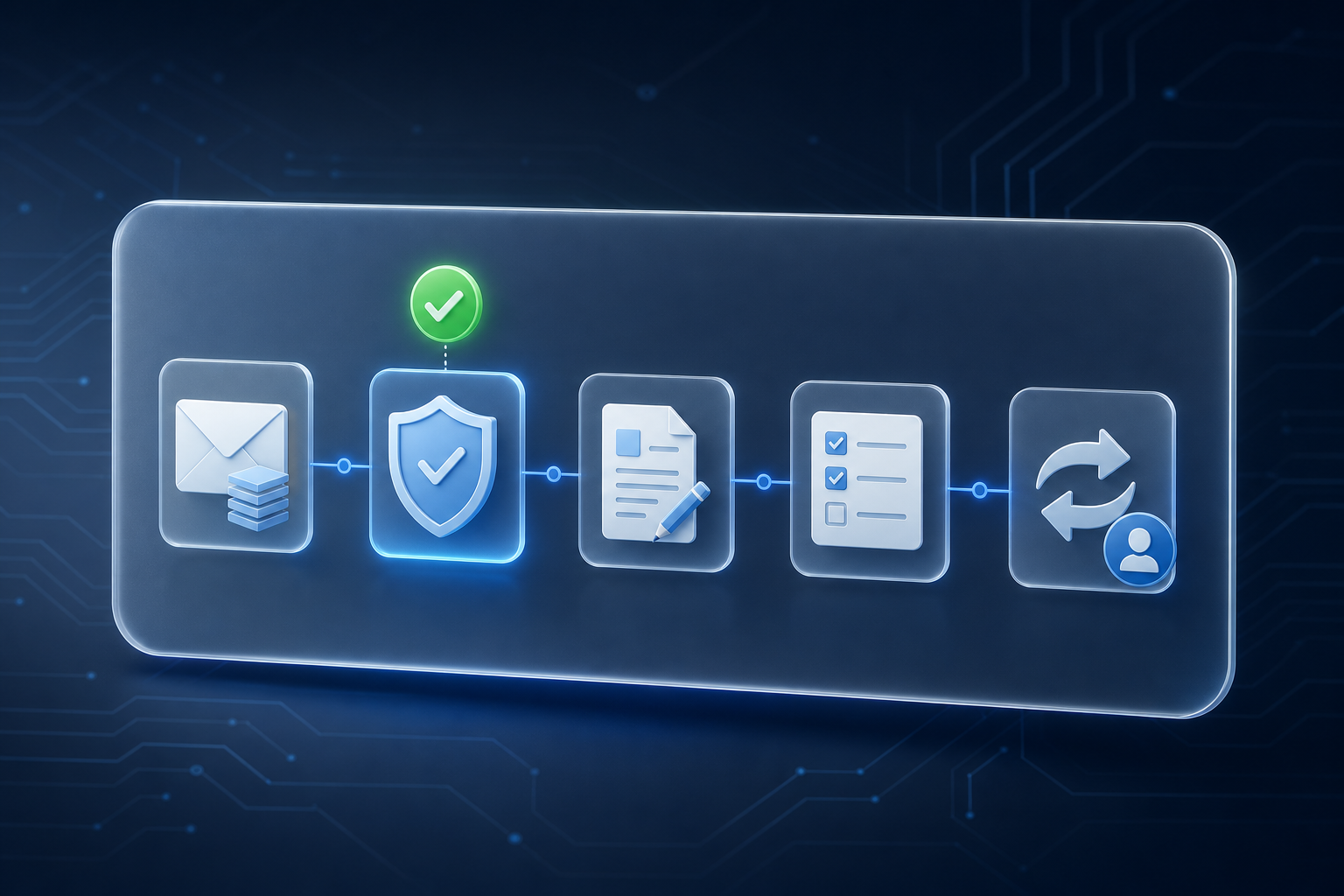
AI sounds like a developer tool. Read the coverage and you would think the whole point of it is shipping code faster.
That framing costs small businesses more than any pricing page does. Owners who do not employ a single developer hear the stories, decide the technology is aimed at someone else, and stop reading.
The work that compounds at a 25-person company is not engineering. It is administrative. Drafting, triage, summarising, handoffs, chasing approvals.
Why AI looks like a developer tool from the outside
Coding assistants produce the most quotable results. Percentage lifts, benchmark scores, demos that fit in a 30-second clip. That kind of story travels.
Operations work does not demo well. Nobody films a quote follow-up going out on time for the fourth week running.
So the visible half of the market is engineering and the useful half is quiet.
That is starting to change. Claude Cowork is aimed squarely at background operational work rather than at writing code.
Plenty of owners write AI off in the first five minutes, entirely because their business does not write software. This is one of the five AI misconceptions that keep small businesses stuck, and it is the most expensive one.
The admin work that quietly eats your week
Look at where the hours actually go in a business your size:
- Drafting the same six emails with different names in them
- Sorting an inbox into what needs an answer today and what does not
- Turning a 40-minute call into a summary someone else can act on
- Handing a job from sales to delivery without losing the detail
- Chasing an approval that has been sitting in someone's inbox for five days
None of that needs a developer. All of it repeats. That is the point.
Four tests for a real automation candidate
Not every admin task qualifies. Run each one through four tests.
- It repeats. On a schedule, or on a trigger you can name out loud. Once a quarter is not enough.
- The output is text. A draft, a summary, a classification. If the output is a judgement call about a person or a price, keep it human.
- You could hand it to a new admin hire with one page of instructions. If you cannot write that page, you have a process problem, not an AI problem.
- A wrong answer gets caught by a review step. Not by a customer.
If a task fails the third test, document it before you automate it. That sequence matters, and most SMBs don't have an AI problem: they have a process problem covers it properly.
SMB example: a 25-person contractor and the approvals backlog
A residential contractor with 25 staff had one recurring bottleneck. Every variation to a job needed sign-off from the operations manager. Requests arrived by email, by text, and as site photos. He worked through them in batches, usually late.
Average turnaround was four days. Crews stood idle waiting on answers.
The fix did not automate the decision. It automated everything around it: pulling every request into one queue, summarising what changed and what it cost, and flagging anything over a threshold for a closer look. He still approved each one himself.
Turnaround went from four days to same-day. No developer involved at any point.
Start with the task you would hand to a new admin hire
That is the filter. If you would give it to a capable admin assistant in their first week, it is a candidate. If you would only trust it to someone carrying five years of context, it is not.
Pick one. Write the page of instructions. Then automate it.
Keep exploring
If you want a second opinion on which of your recurring tasks are genuinely worth automating, contact FIT and we can work through them together.