Reading every AI draft forever is not the safe option
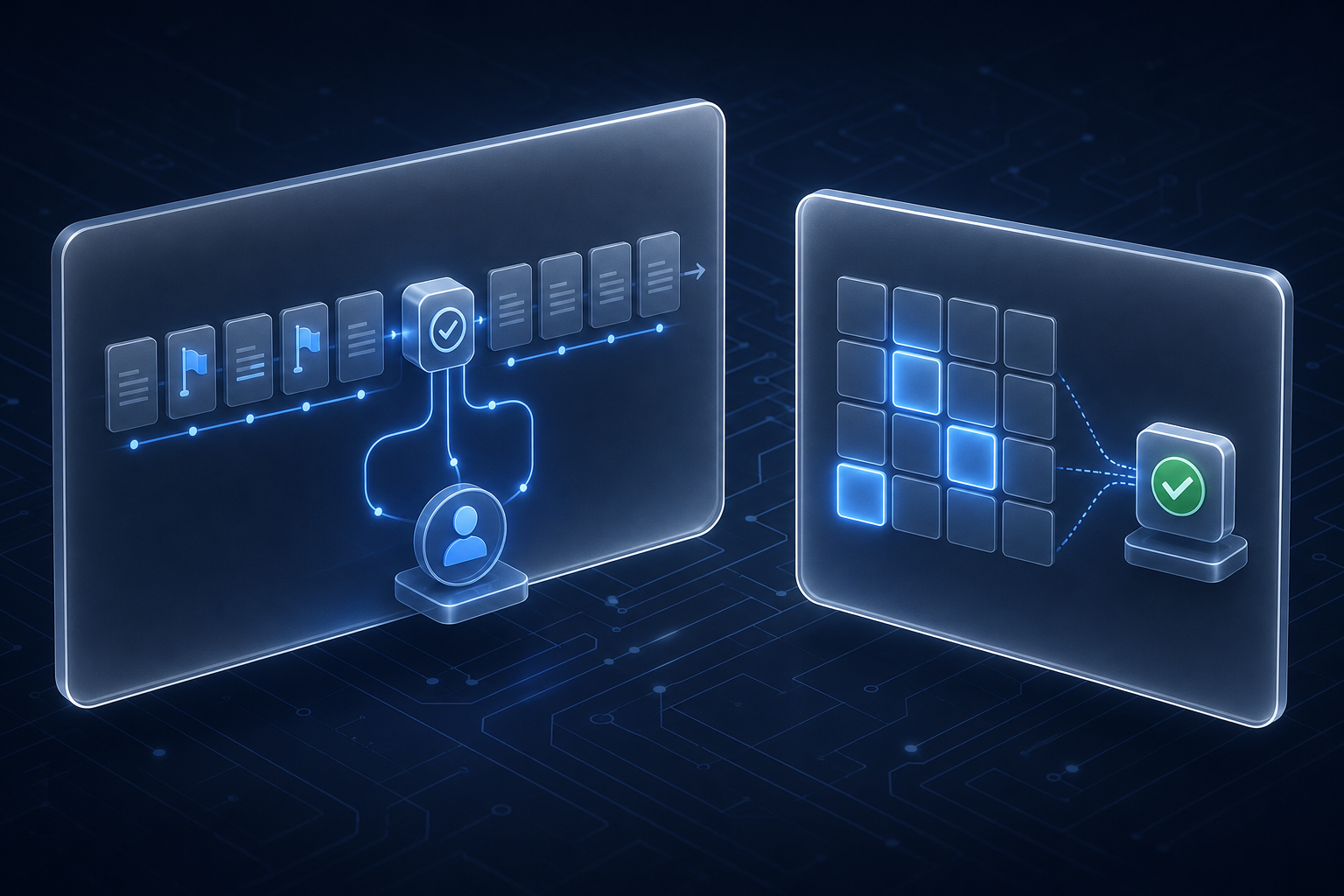
Read every output when an automation starts. Then decide, in writing, when you stop.
Most owners get the first half right. They put a person on every draft, as they should. The mistake is that nobody ever decides when that phase ends. So it never ends on purpose. It ends by drift, and drift is the worst way for a check to end.
A renewal summary approved in four seconds
A 16-person insurance brokerage uses AI to draft renewal summaries. An account manager approves every one before it goes out. She has done this for five months.
Each approval now takes about four seconds. Last week a summary with the wrong renewal date went out. It was approved. Nobody caught it, because nobody read it.
She still spends around six hours a week on approvals. She no longer reads them.
Why reading every item stops being reading
This is not a discipline problem. It is what people do. A reviewer who sees a long run of correct drafts starts to glance. Then she clicks approve. Then she approves without reading at all.
At that point the business is worse off than with no check. With no check, everyone knows the gap is there. With an approval nobody reads, everyone believes the gap is closed. The approval hides the risk instead of catching it.
The hours that never come back
There is a second cost, and almost nobody counts it.
If a person still touches every item, most of the time the automation was meant to save is still being spent. Six hours a week is close to a full day. The owner looks at the numbers months later, sees no time saved, and concludes the automation did not pay. It may have worked fine. The review step ate the return.
Write the promotion rule before the automation starts
The move from reading everything to reading only the exceptions should be a written decision with a trigger. Write it before the first draft goes out, next to the standard you set when you counted the mistakes the manual process already makes.
A promotion rule fits on one page:
Workflow: renewal summaries
Owner: [name]
Standard: no more errors than the manual count found
Promotion trigger: [number] clean weeks against that standard
After promotion:
  - The automation flags any draft it is unsure of for a person
  - A person reads a small random sample each week
Demotion triggers: see below
Next review date: [date]
This sits inside the approval gate, not in place of it. The gate stays. What changes is how much passes through it by hand.
I would not let any workflow sit in read-every-one mode for more than a few weeks without someone deciding, in writing, whether it moves up or stays. Staying is a fine answer. Not deciding is not.
What sends a workflow back to full review
Promotion is not permanent. Write down what sends it back:
- A customer sees a miss. One is enough.
- The weekly sample finds a miss. Same result.
Either one returns the workflow to full review until the cause is found and fixed. Then the clean-week count starts again.
Stepping back is normal operation. It is not a failure, and nobody should treat it as one. A workflow that moves down when it should and up when it has earned it is a check that still works. A workflow that never moves is a check nobody is doing.
Keep exploring
If you want help writing the promotion and demotion rules for a workflow you already run, contact FIT.